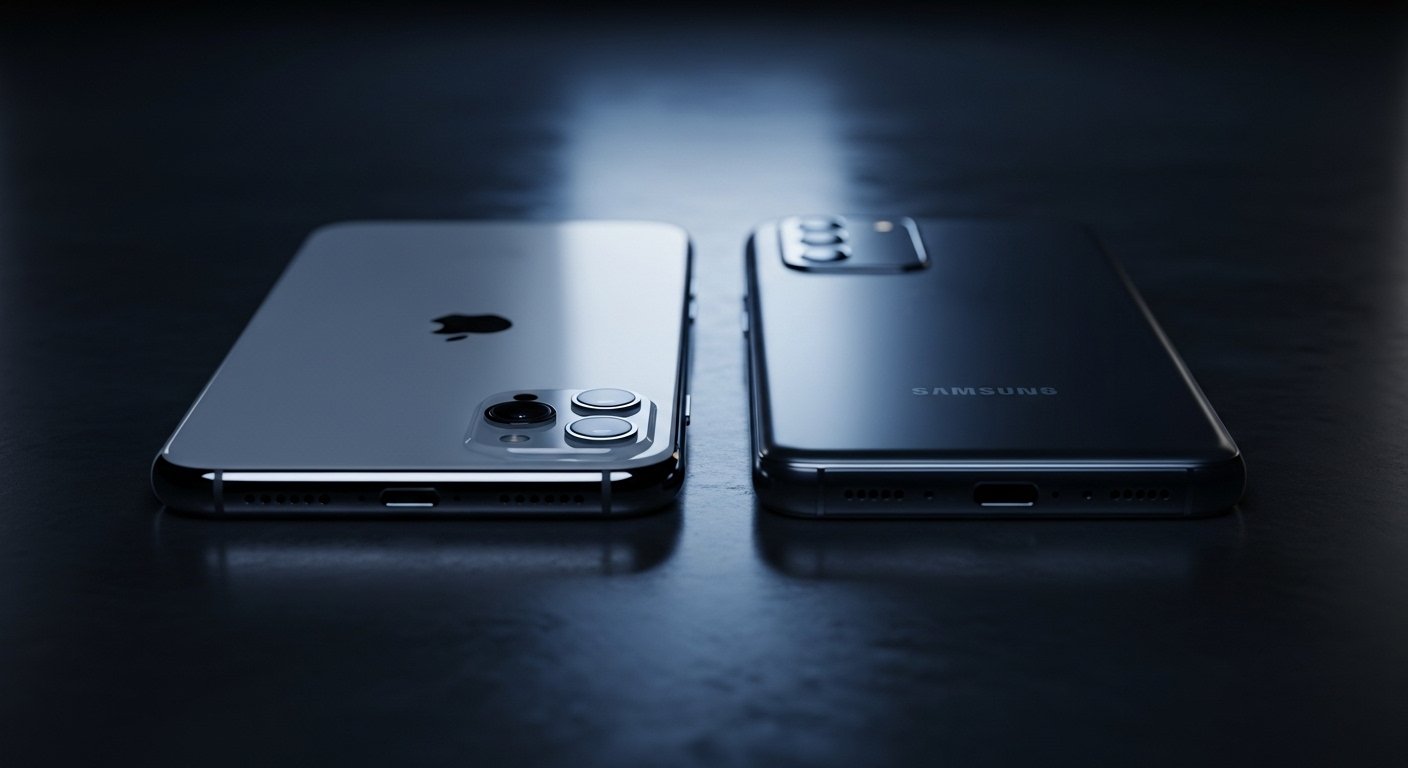
The history of the contemporary American business has never featured any corporate rivalry as openly, costly, and impactful as Apple v/s Samsung. Two companies. Two philosophies. Two ideas of what a smartphone ought to be and to whom it ought to serve. The one started as a supplier of the other and turned into the most formidable rival. What ensued was a 10-year battle that was fought in the courts, boards, and in the pockets of the billions of consumers all over the world.
The Origin
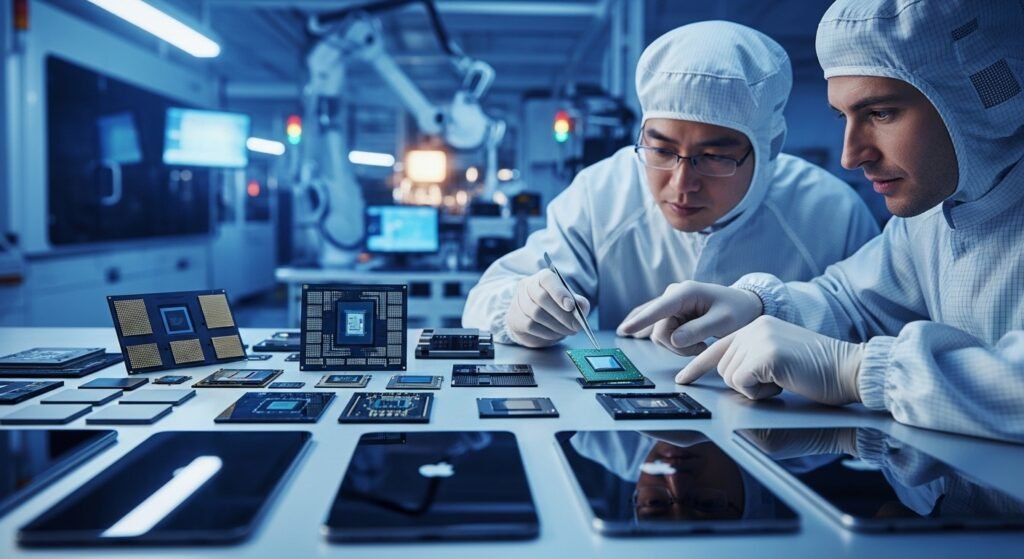
The genesis of the rivalry has an amazing twist of irony to it because Samsung was formerly a key and highly important component producer of Apple, lending its chips and display to the first iPhone. Apple considered it to be the most significant competitive betrayal when Samsung introduced its own touchscreen smartphones soon afterwards.
Steve’s Fury
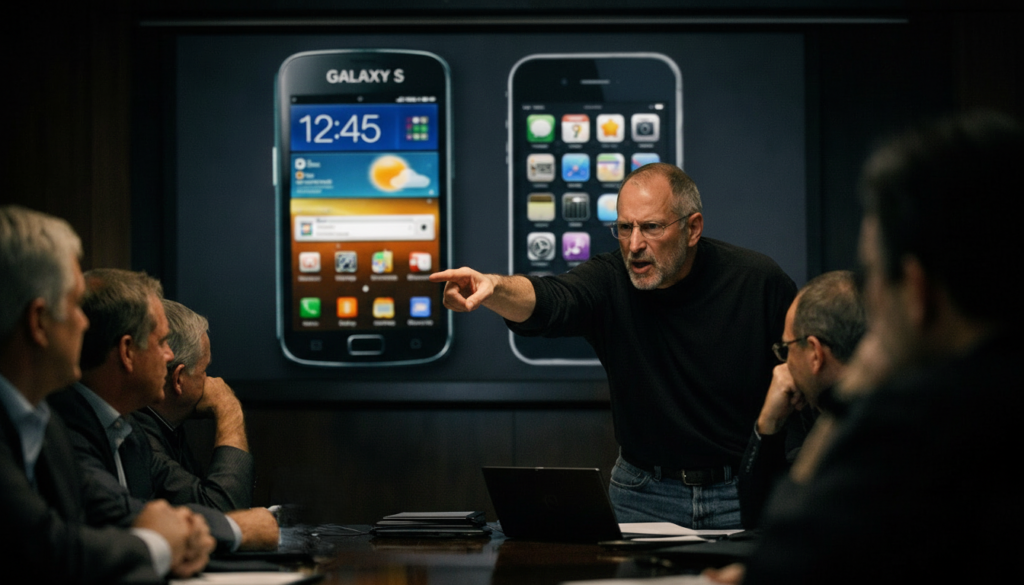
Internal reports revealed that Steve Jobs was deeply furious about the Samsung Galaxy lineup, privately labeling it an outright theft of the iPhone. He vowed to unleash every available resource at Apple in a fierce legal showdown against Android, specifically targeting Samsung. This declaration sparked one of the most expensive patent wars in U.S. history.
The Courtroom
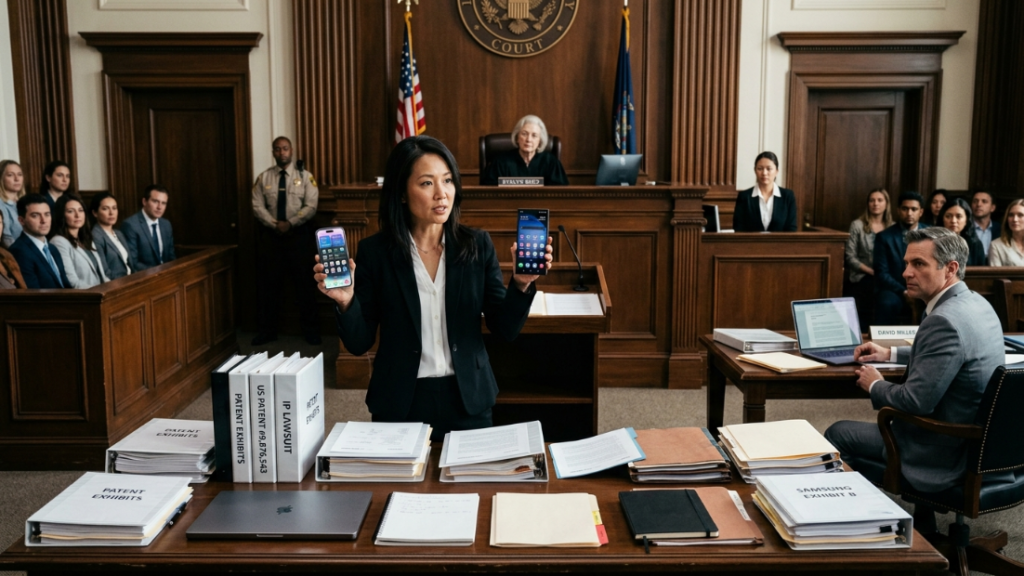
In 2011, Apple initiated a lawsuit against Samsung, alleging that its Galaxy devices were closely mimicking the design, interface, and user experience of the iPhone. This landmark case navigated through courts across four continents, generating over a billion dollars in financial implications and setting legal precedents that transformed the landscape of intellectual property rights within the global technology sector.
Galaxy Rises
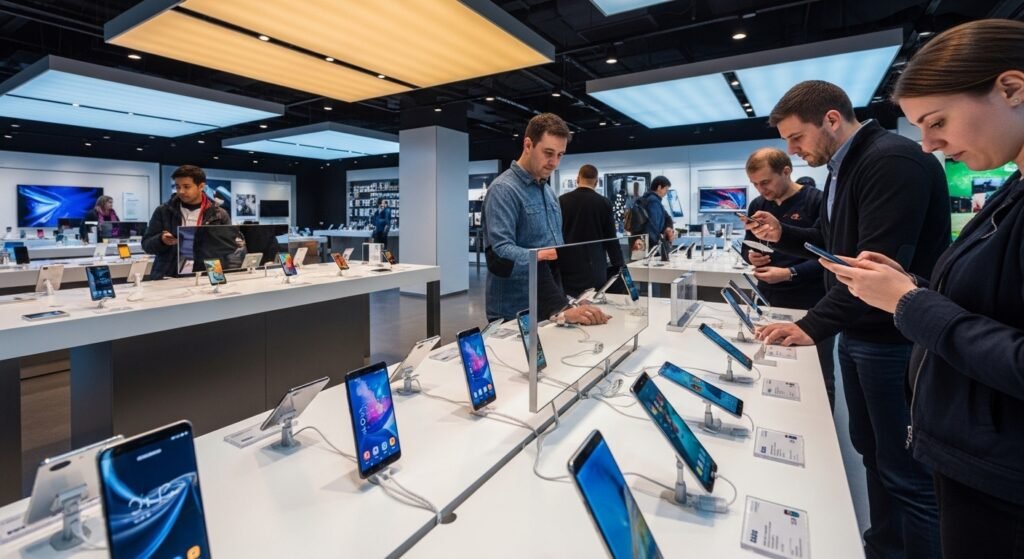
As Apple battled in court, Samsung battled in the marketplace with unstopping aggression, launching more products, attacking at more prices, and flooding all global markets that Apple might or might not reach with premium prices. The Galaxy S brand emerged as the most plausible Android alternative to the iPhone that American consumers had ever seen.
Hardware War
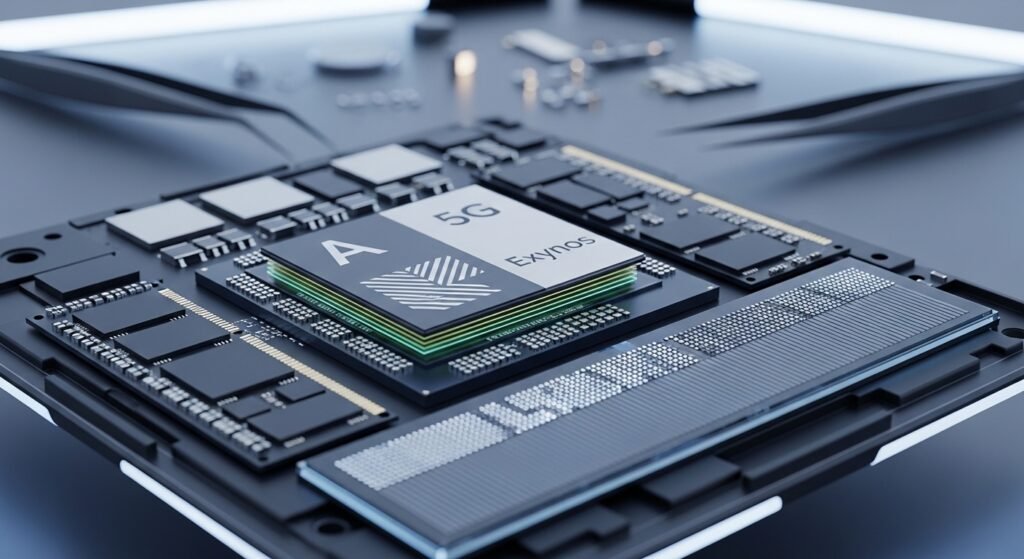
The vertical integration allowed Samsung to have a manufacturing advantage that an American technology company could not easily achieve. Creating its own memory, displays, and chips meant that Samsung was able to innovate on a component level more rapidly and cheaply than the other companies. Apple replied by designing its own silicon, A-series of chips, which ended up being the most powerful in the industry of smartphones.
The Ecosystem
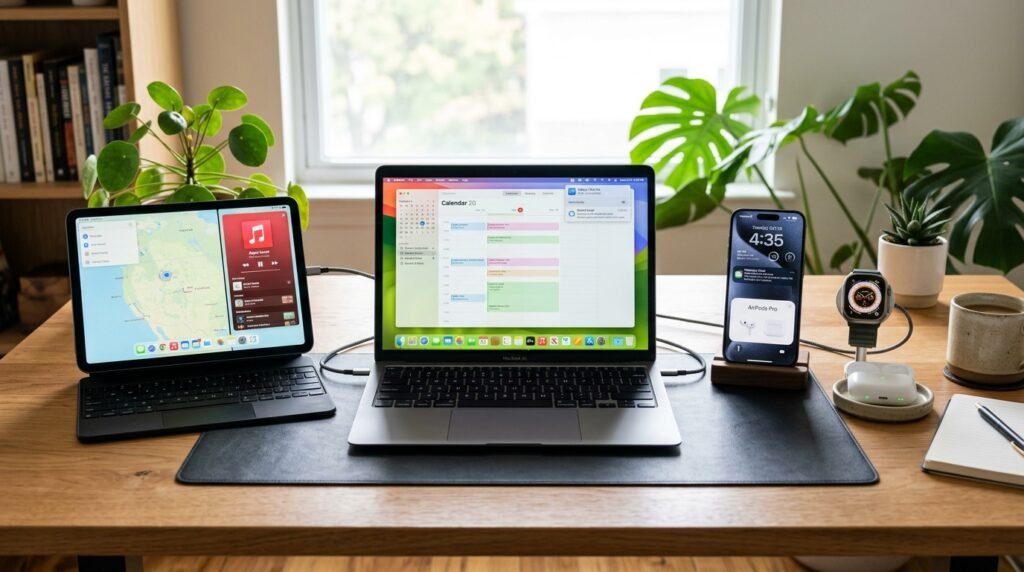
Apple’s true strength lies not in a singular competitive advantage but in its robust ecosystem, which seamlessly integrates the iPhone, iPad, Mac, Apple Watch, AirPods, and iCloud. This interconnected online experience has fostered a perception of premium value among American customers immersed in the Apple ecosystem. Meanwhile, Samsung has struggled with its hardware specifications and has lost millions of customers due to the allure of ecosystem loyalty.
Note Explosion

The worst self-inflicted crisis facing Samsung came in 2016 when the Galaxy Note 7 started to spontaneously burst into flames, owing to a flaw in the production of a battery. Airlines and the US Consumer Product Safety Commission declared the ban of the device, and Samsung suffered a loss of an estimated five billion dollars. The sales of the iPhone 7 at Apple increased as soon as the US consumers left the Note 7 behind.
Innovation Race
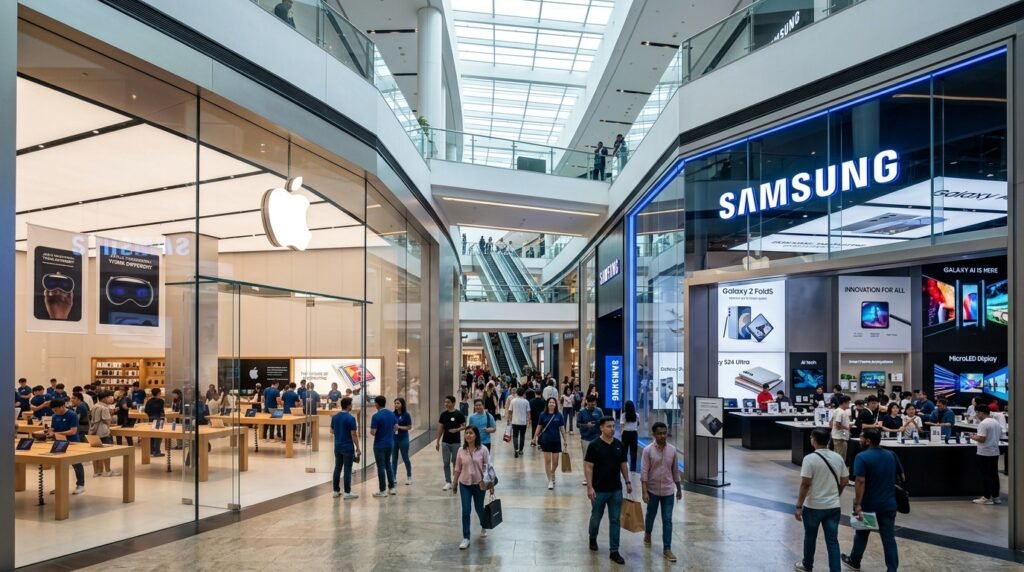
The Apple-Samsung competition essentially jump-started the innovation of smartphones for all American consumers, irrespective of their brand preferences. Bigger screens, face recognition, edge-to-edge, multi-camera systems, and foldable form factor were all more quickly developed as two of the most resourceful technology firms in the world were competing with each other with a sense of real urgency to outdo each other with each passing year.
Market Split
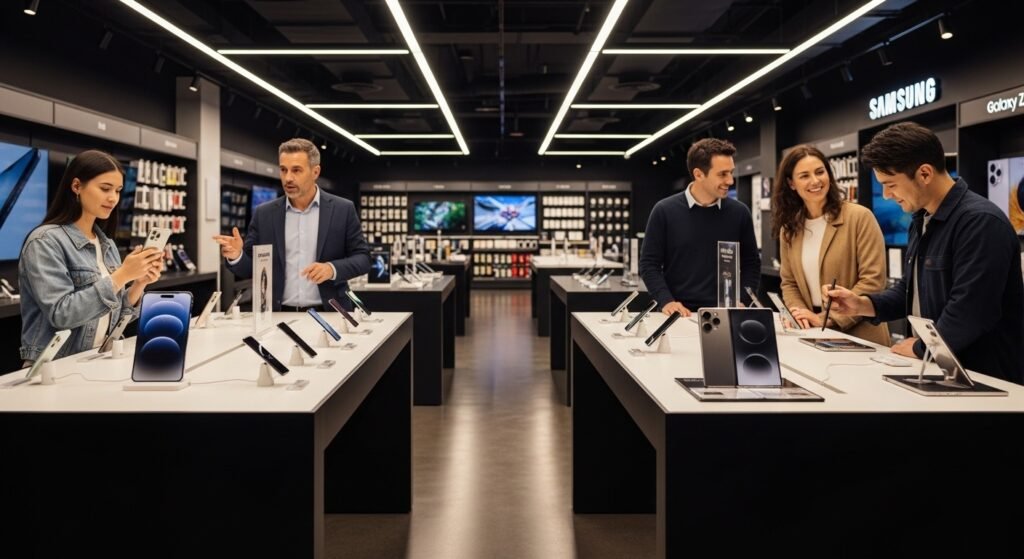
The American smartphone market eventually split on defined philosophical grounds – Apple dominating the high-end market with tremendous brand loyalty and Samsung dominating the world in terms of volume with an unparalleled diversity of products at all price points. The companies did not eliminate each other. Both instead expanded to trillion-dollar businesses based on the competition between them.
Still Fighting
Apple and Samsung remain the dominant forces in the global smartphone market, and over fifteen years after the original iPhone revolutionized the industry, these two giants continue to engage in fierce competition. With each new iPhone and Samsung Galaxy release, millions of American consumers eagerly await, analyze, and evaluate these groundbreaking devices, which represent one of the most personal technology investments in their lives.